Showing posts with label Exemplar. Show all posts

Thursday, October 27, 2011

077 Exemplar: BMW Guggenheim Lab


A mobile piece of architecture that will be moving through 9 different cities and rebuild for an exhibition in New York City by the end of its cycle. It is currently set up in New York on a corner of Houston St. I think this is a really simple design, and like most architectural presence, aims to engage the everyday people to participate in building what they want of the city they live in.

The interesting component about this project, was the fact that it was a collaboration of various disciplines.

~ H

Saturday, October 22, 2011

073 Exemplar: Presentation


I was flipping through BIG's archicomic book and felt that some of the methods of presenting their firm's design approach made sense, no matter how complicated their design appears to be. This particular page of the book (page 90), is an example of how I can adopt the idea process behind my design. It's just an example that I quite like because the "stage-by-stage" approach is very easy to "read", which is something I'd like Jane & the other tutors to feel when they look at my presentation later.

~ H

Tuesday, October 18, 2011

069 Exemplar: "Zombie Safe House Competition"

One of the Competition Entry for 2011 Zombie Safe House Competition
http://zombiesafehouse.wordpress.com/z1538/

I found an article on Inhabitat about a competition to design Safe Houses for the civilisation to prepare against the possibility of a Zombie Apocalyse [a bit far-fetched coz I don't believe in these things but I'm all for creativity] and I found this competition entry of a particular interest - Zombie Ranch.

I am more interested in the form of this entity. I have been trying to form different levels of activities with a central core and with the emergence of this design entry online, it is obviously a coincidence that what I'm trying to create is almost similar. Of course the context & environment that between this design and mine is totally different. A fun, interesting competition nonetheless!

~ H

Sunday, October 16, 2011

066 Exemplar: Hoberman Transformable Canopy


This transformable canopy by Hoberman Associates was a preliminary design commissioned by SHoP Architects. It was... "for an innovative canopy that extends to cover an open plaza, and then retracts, nesting into a large architectural column. The canopy is developed from a unique spiral geometry, constructed of structural panels and supported by a series of tension rods." I think the idea behind this is exactly what I am trying to do for my roof design of A.C.A.E. - the retracting roof concept -, as has been blogged about in the last 3 entries. Although, what I'm trying to do is a bit more straightforward, in the sense that the roof retracts left to right and into the central column core, instead of in an anti-clockwise/circular motion the way Hoberman have explored. There is a 13-sec clip on their website worth watching for you to have a feel of how it works. Check it out here - Transformable Canopy.

~ H

Thursday, October 06, 2011

Friday, September 16, 2011

046 Exemplar: Peripheral Cultural Context


I  found this from reading an architecture atlas, which I can't recall the name now, the context on "peripheral culture complex" comparing Australia's architecture to Sicily's (Italy)  architecture. Architecture by Glen Murcutt for housing in Australia is another mobile interpretation of encouraging and "exciting" nature that triggers interest from students as far away as in Italy.

~ H

Thursday, September 15, 2011

042 Exemplar: ACCA in Melbourne, Australia


The Australian Centre for Contemporary Art in Melbourne (ACCA), Australia, I feel embodies elements of a structure that;

1. houses a special set of "creativity" (= art) representing the culture of Australia, and
2. reflects the rustic nature of Australia's environment.

It is not exactly a piece of architecture that comes under the banner of "mobile architecture" but it being a centre of ever-changing pieces of art, it can be interpreted that the uses and users within are the "mobile" elements of this architectural design. I think even the siting of the building is apt - conveying a desert-looking persona.

Materiality is definitely a significant aspect of my mobile entity. 
CORTEN STEEL, CLAY, BLACK STONES, BLUE SKIES, BURNT GRASS, GREEN GRASS, BARREN & FERTILE SOIL, are just some materials and colours that instantly pops up.

If I could just "borrow" the analogy ingrained into ACCA, I would recreate pieces of elements to say,
"The Ministers' Step: This place celebrates the remarkable contribution
made by ministers to Australia's contemporary culture."

~ H

ps: Images are my own, and I have been inside & around this building to get a feel of it.

Monday, September 12, 2011

040 Exemplar: Registry Office of St Vicente by Duarte Caldeira

"Situated on the northwest coast of the island of Madeira, Portugal, in an extensive river valley, it is near the centre of a small coastal rural village, nestled between the region’s natural landscape, which extends towards the area where the building is located...
Instead of demolishing the existing small buildings to make room for the new one, it was decided to use some of them as part of the new building, and also keep the original staircase and lift which gives access to the car park located below...
The design program of this public services’ building is a simple one. It houses an open space office and workspace for the registrar office personnel, an archive area and a main private office, a meetings room and a reception counter for the general public."
http://www.dezeen.com/2011/08/11/registrar-office-of-st-vicente-by-duarte-caldeira/

I believe this design is a Major Addition & Alteration project that retains all of the existing small buildings. What is significant about this design, is not so much about why it was built but the context that it was sited on, and the materials that was selected for it.


Project Name – Registrar Office of St Vicente
Architect: Duarte Caldeira
Location: S.Vicente, Madeira, Portugal
Project Team: Duarte Caldeira, Filipe Clairouin, Roberto Castro
Structural Engineers: Casca Lda
Project Year: 2008
Start and Completion Dates – November 2009 / May 2011
Project Area: building 420m2, site 3360 m²
Reference URL: http://www.dezeen.com/2011/08/11/registrar-office-of-st-vicente-by-duarte-caldeira/


Buzz Words and Phrases

...instead of demolishing
...nestled between the region’s natural landscape
...for the general public

I think what's important - and will be explored - for my design of the "mobile" entity/element/etc. is keeping aspects of the selected site pretty much the way it is, on a route that accessible for both the natural and built environment, and of course, accessible enough for the general public, who are the intended users. Governmental presence, at this stage, I feel will be a slow-but-surely felt element - not immediate. Maybe. Oh, and not forgetting the MATERIALITY aspect of this "mobile" entity/element/etc.

~ H

Friday, September 09, 2011

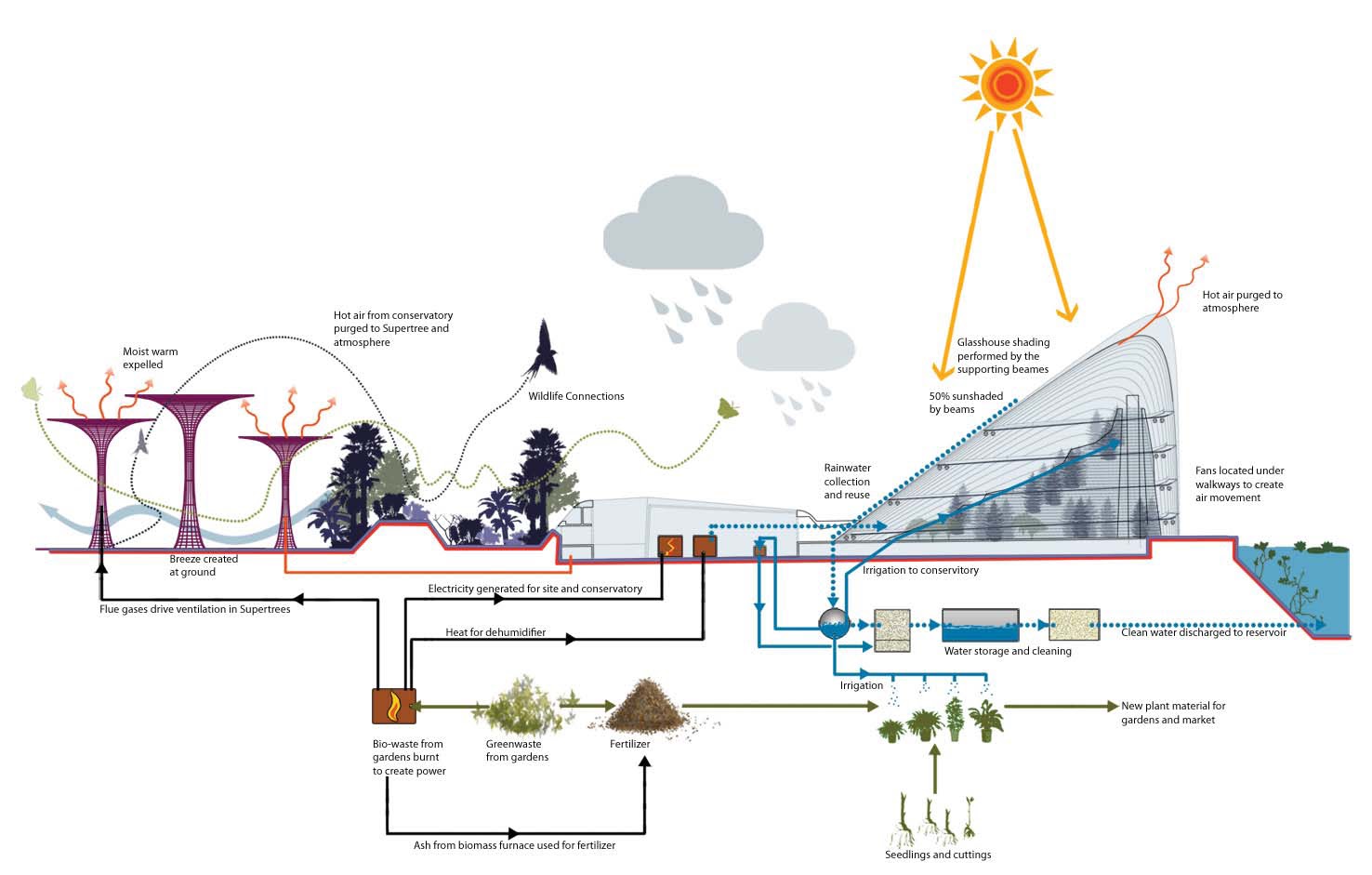
038 Exemplar: Gardens by the Bay, Singapore

"Inspired by the orchid shape, the master-plan addresses two main themes; plants & peoeple , and plants & planet. both narratives encompass the length of the park and feature special attractions with the help of an intelligent infrastructure that even allows the cultivation of plants which would not otherwise grown in Singapore."
[reference to be updated & added]

This is a (governmental?) initiative which in my opinion shows the deep interest that the government has towards expanding the knowledge of its own citizens towards global biodiversity without having to get out of Singapore. Alternatively, I can also view this as one way to encourage the citizens to be more open to learning about the expansive climate of biodiversity that exists outside the limited shores of Singapore. This encourages Singaporeans to be more mobile by traveling out of Singapore to see for themselves natural environment that can't be found in Singapore. Holistically, I think this sets the Gardens by the Bay as an initiative on a platform acting as a catalyst into triggering interest at both a local and global context.

Impression of Architectural Design by Wilkinson Eyre Architects
http://www.wilkinsoneyre.com/projects/singapore-gardens-by-the-bay.aspx?category=sport-and-leisure
Building upon this idea, a hypothetical Australia can be a the labyrinth of many different initiatives pushed by the government. These initiatives are not strictly designed to be within Canberra or within the governmental state, but to be designed to be found in every state of Australia instead. I am possibly treading towards an idea that will generate a static-mobile structure that can be found on the periphery of every state, using the areas on the fringes of different metropolitan cities as a context.

Illustrative section of Landscape Design by Grants Associate
http://www.grant-associates.uk.com/projects_77_2921.aspx

Environmental design information provided by Atelier Ten
http://blog.emap.com/footprint/2010/12/06/rsa-recognises-sustainable-design

Here are some FAST FACTS about Singapore's Gardens by the Bay  which I have taken from the website itself. It pretty much gives a background overview (or executive summary) of the context, location, brief design and what will be procured for the gardens. I have placed these facts under appropriate headings for a clearer understanding:-

Context & Environment
  • Singapore' s geographical location is 1 22 N, 103 48 E. The equator passes 137km south of the island.
  • Singapore has a population of 4.6 million (Jul 07 estimate) and a land area of 682.7 sq km or about 3.5 times the size of Washinton DC .  It has a coastline of 193km. 
  • Gardens by the Bay comprises three gardens around the Marina Channel in the southern part of Singapore . Once the Marina Barrage is ready, the Marina Channel will, over two years, become a fresh water lake and supply 10 per cent of Singapore' s water needs.  
  • The total size of Gardens by the Bay is 101 hectares or 177 football fields.  Bay South is 54 hectares, Bay East is 32 hectares and the Bay Central is 15 hectares. 
Location
  • The Gardens will be built on land that was reclaimed from the sea some 30 years ago. The new downtown Marina City is being developed around Marina South. 
Design
  • In January 2006, an international master plan design competition for the Gardens was launched.  Some 70 teams comprising 170 firms, from over 24 countries, including 35 from Singapore , participated in the competition.
  • An 11-member Jury comprising local and international experts shortlisted eight teams and two winners were announced in September 2006; namely Grant Associates for Bay South and Gustafson Porter for Bay East, both from the UK.  Bay Central will be developed later.
  • The site for the Gardens (Bay South and Bay East) was hoarded up in June 2007.
  • The first phase of the Gardens - Bay South - is expected to complete by end 2011.
Location of the Gardens by National Parks Board of Singapore
http://www.gardensbythebay.org.sg
Community Involvement & Participation
  • A public exhibition of the master plan concepts and models of the winning teams was held from 6 - 23 September 2006.  Some 10,000 people visited the exhibition and over 700 gave feedback directly via feedback forms, face-to-face interviews, online feedback and focus groups surveys.
  • An overwhelming majority (85%) of those surveyed liked the features in the master plans and over 97% said they would visit the gardens.
Sustainability Aspects

Sustainable design data and description provided by Wilkinson Eyre Architects
http://www.wilkinsoneyre.com/projects/singapore-gardens-by-the-bay.aspx?category=sport-and-leisure
~ Hana

Sunday, September 04, 2011

037 Exemplar: UK Pavilion @ Shanghai Expo 2010


UK Pavilion at Shanghai Expo 2010 by Thomas Heatherwick from Dezeen on Vimeo.

One or more seeds of various plant species, sourced from China’s Kunming Institute of Botany, were encased at the tip of 7.5m long fibre-optic rods. These 60 000 rods was said to be distributed across China and the UK to hundreds of schools as a special legacy to Shanghair Expo 2010.

I thought this is another one interesting example of a piece of exposition. It portrays more than just the identity of the people of United Kingdom and the theme set out by the exposition's organizers. More than that, there is a sense of "social regeneration" (I'm not sure if this phrase exist, I think I just made it up) in using an architectural design/piece to build and strengthen the relationship between the British and the Chinese.

~ Hana

Thursday, September 01, 2011

031 Exemplar: expo Zaragoza 2008 "Digital Water Pavilion"


Carlo Ratti's DWP Project Website: http://www.carloratti.com/projects/022.htm
PDF of Project: http://www.carloratti.com/projects/pdf/022_DWP.pdf
Digital Water Pavilion: http://www.dwp.qaop.net
Expo Zaragoza 2008: http://www.expozaragoza2008.es/

The MOVEABLE Roof of the Digital Water Pavilion
http://www.dwp.qaop.net/?lang=en#project
This is one of the most intriguing exemplars that have made quite the impression and impact in my perception of future architectural and urban designs. Carlo Ratti's introduction to architecture that senses and responds (when I was in Stuttgart for a workshop) holds a very relevant theme in terms of using "MOBILE" architecture as a strategy and catalyst in designing the VISION that our group have finalised upon - which will be presented during tutorial tomorrow (Friday at 1pm).

You will see the mention of this similar sort of exemplar coming up pretty frequently in my upcoming blog entries, as I am really inspired by the works of Carlo Ratti and the MIT SENSEable City Lab. I feel that Australia, together with most countries all over the world grappling with metropolitan cities within their nation, is looking towards this sort of urban design using architecture as a device and technology to integrate the social shifts that we have begun to observe in current urban contexts, with the built environment.

A Word on Digital Water Pavilion
"At its core, the DWP has been designed to be an open system where its technologies can be improved upon and can evolve with advances over time. The pavilion is also an open system in the sense that the designers do not decide how it reacts, but leave it in the hands of its users."
This pavilion will serve as an example as to the way I will respond to/for my architectural presence and identity.

~ H

030 Exemplar: FREITAG's "Container Architecture"


Freitag's flagship store on Geroldstrasse 17 in Zurich is an experience of shopping, or just being within a confined space of what is now a series of stacked abandoned, unused shipping containers - an example of "static" mobility. Urban mobility in 21st century is a new wave of traveling that has organically found its way into innovative solutions for an architectural space (or even simply, just a space) to house commercial goods. This is just one of many existing exemplars in recent times, showcasing designers inclination towards developing nomadic alternatives infused into their design.

"The FREITAG SHOP ZURICH is completely built from rusty, recycled freight-containers. Lovingly they were gutted, reinforced, piled up and secured. Zurich’s first bonsai-skyscraper: Low enough not to violate the city’s restriction on high-rise buildings. High enough to send shivers down anyone’s spine."
Telstar Logistics 2006

~ H

ps: Images are my own, and I have been inside these container shopping store.

Sunday, August 07, 2011

008 Exemplar: Centre Georges Pompidou


Centre Georges Pompidou, obviously a well-recognised piece of building which was built ahead of its time. The characteristics that's embodied within this piece of exemplar, is one that is Flexible in nature, but definitely Mobile. Flexibility in the way the building was initially intended for in terms of moving floors, and Mobility, because it is a place for movement, transient not structurally but in the way people and art within, constantly move and changes. It stands the hands of time.

~ H

ps: When I was there, I stood stationary for a quite a long period of time both outside and inside the building. It was strange how this museum stood within an urban context that's far removed from any form of similarities, and when standing inside, I feel "comfortable" in the sense that it felt like a building built for "now", 2001 and beyond, and not before.